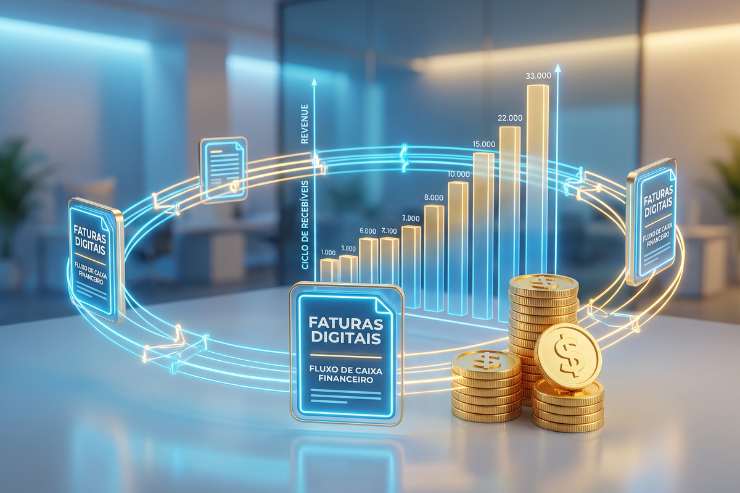
THE electronic duplicate is a credit instrument issued and maintained electronically, which represents an amount to be received of a product sale or provision of service carried out on credit.
To understand it simply:
Company “A” sells R$ 100,000 worth of products to company “B”.
Payment will be made in 60 days.
AND a duplicate invoice was issued Regarding the operation.
THE The title is registered. electronically in an authorized system.
Information such as ownership, due date, negotiation, and payment are recorded.
In practice, it makes the receivable more organized, traceable and secure.
The invoice proves the commercial transaction. The electronic duplicate represents the right to receive payment for that transaction on credit.
It can also help reduce fraud and duplication, facilitate the identification of credit ownership, and provide greater security to credit and receivables financing operations.
But be aware: A written duplicate invoice does not guarantee payment.. If there is a default, collection and negotiation actions are still necessary.

Will a written duplicate invoice solve corporate default?
No. But it could transform the way credit is done. registered, monitored and recovered.
With more structured information Regarding ownership, negotiation, and payment, receivables become more traceable and secure.
Even so, remain essential Risk analysis, preventive monitoring, identification of delays, negotiation, and relationship building.
This is where the transformation intersects with Way Back's trajectory.
Electronic duplicate invoices strengthen the credit infrastructure. Way Back operates in the management, protection, and recovery of the value that circulates through this infrastructure.
The future of recovery will not just be digital. It will be digital, intelligent, and relational.
When will the implementation take place?
The electronic duplicate ecosystem was officially launched in June 30, 2026, ...and the implementation of the mandatory requirement will be gradual.
The forecast is:
- June 2027: Large companies with annual revenue exceeding R$ 300 million;
- December 2027: medium-sized companies;
- June 2028: small businesses.
Like this, 2026 is an important period. of preparation and adaptation of systems and processes.
The requirement relates to the trading of commercial receivables and the rules applicable to these transactions. Therefore, This does not mean that every sale on credit will automatically be required to generate a written invoice.

How can Way Back contribute to this scenario?
Intelligent Management of Book-Entry Receivables
The new dynamics of receivables also It requires more attention to monitoring information and identifying possible discrepancies.
THE Way Back could to contribute with:
- Follow-up on presentation, acceptance, and rejection;
- Contacting customers to resolve discrepancies;
- Identifying unrecognized invoices;
- Handling registration or commercial errors;
- Reconciliation between invoice, order, delivery, payment, and duplicate invoice;
- Monitoring due dates;
- Updating customer systems;
- Preparing cases that need to proceed to collections.
The proposal is track your receivable throughout its entire journey., using data, technology and relationships to act before an inconsistency turn into a problem collection.

Jefferson Frauches – Way Back Board