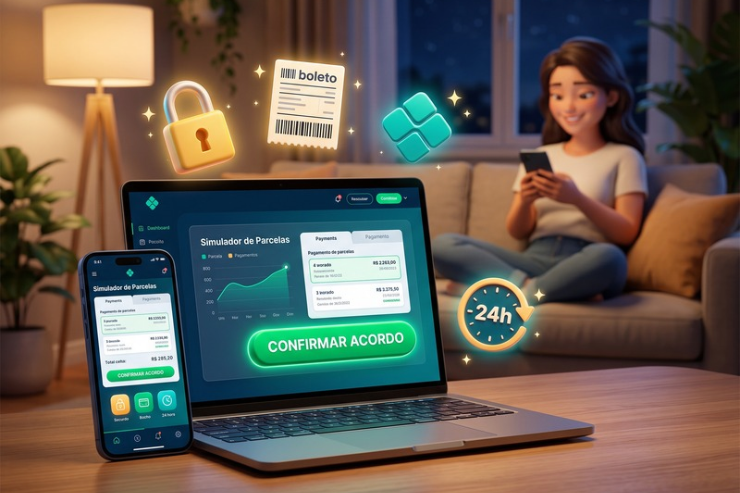
Debt Self-Negotiation: How it works and advantages for companies
A debt self-negotiation platform is an online portal where debtors can access their outstanding debts, view payment options, and formalize settlement agreements, all without human interaction. For creditor companies, this technology reduces collection costs, increases recovery rates, and offers convenience to debtors, accelerating the resolution of defaults.
In this article, we explain how an automated negotiation platform works, what advantages it offers to creditors and debtors, and why this technology is revolutionizing debt recovery in Brazil.
What is an auto-trading platform?
A self-negotiation platform is a digital system that allows debtors to negotiate and settle their debts autonomously, 24 hours a day, 7 days a week. The debtor accesses the portal with their CPF (Brazilian individual taxpayer registration number) or CNPJ (Brazilian company taxpayer registration number), views outstanding debts, simulates payment conditions (cash with discount or installments), and generates the payment slip or payment link to finalize the agreement.
The process is simple, quick, and hassle-free. The debtor doesn't need to call any number, doesn't face a waiting list, and doesn't go through negotiations with a human operator. Complete autonomy in the process reduces the psychological barrier to admitting a debt and seeking a solution, which directly contributes to an increased recovery rate.
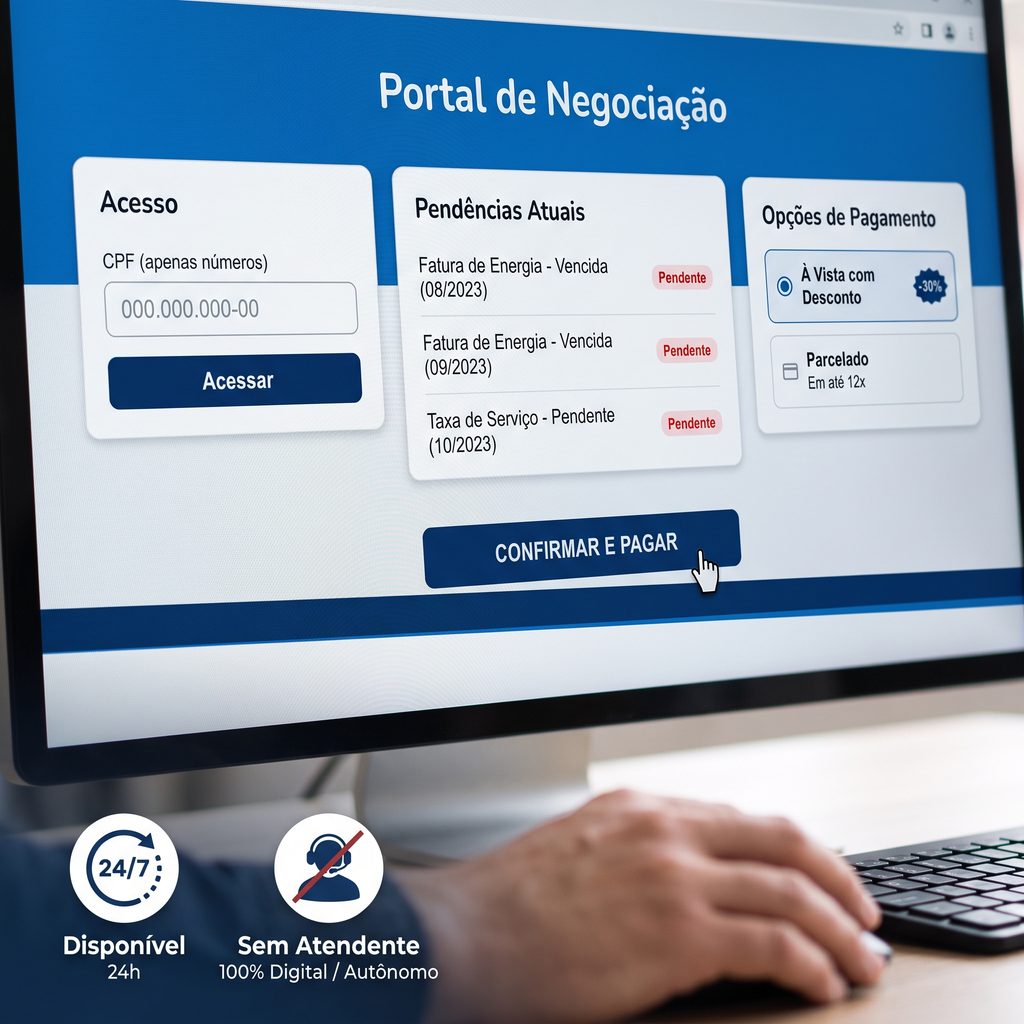
For the creditor, the platform operates as an additional collection channel that works automatically, with no marginal cost per interaction. Each defaulter who resolves their debt through the portal represents a recovery without investment in human contact.
How it works in practice
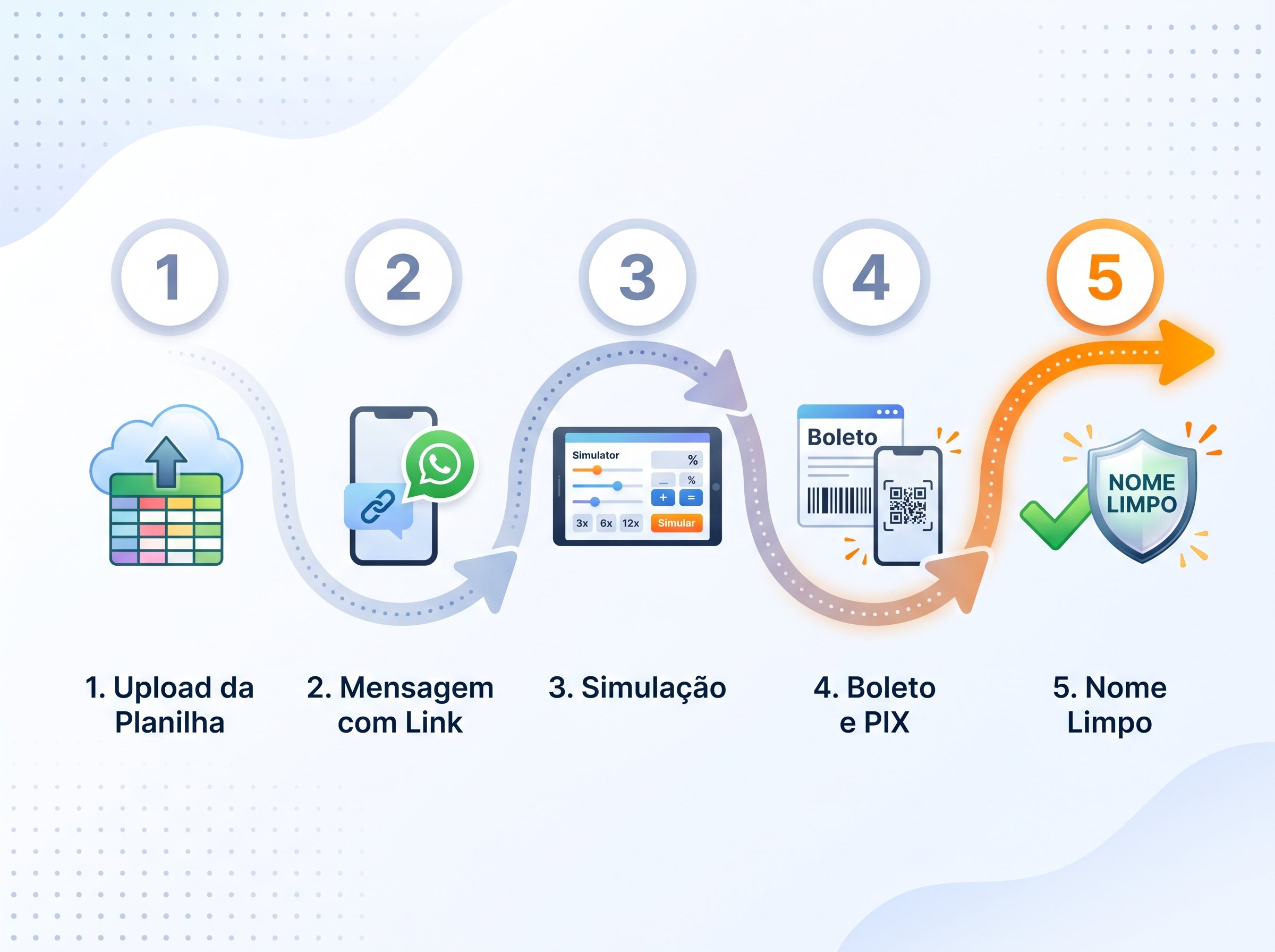
The typical workflow of an automated trading platform follows these steps.
In the first stage, the creditor (or their collection agency) uploads the portfolio of delinquent accounts to the platform, with debtor data, amounts owed, due dates, and pre-approved negotiation conditions (discount percentages, maximum number of installments, minimum down payment).
In the second stage, the defaulting party is directed to the portal via a link sent by SMS, WhatsApp, email, or DDA (Direct Debit Authorization). The communication is personalized and includes the portal address, access credentials, and a message encouraging negotiation.
In the third step, the debtor accesses the portal, views their outstanding debts, and simulates different payment scenarios. The interface clearly shows how much they owe, what installment options are available, what discount is offered for cash payment, and how much each installment will be.
In the fourth step, the defaulting party chooses the option that best suits their situation and confirms the agreement. The system automatically generates the payment slip, PIX payment, or payment link.
In the fifth step, after payment, the system confirms the settlement, updates the creditor's database and, if applicable, triggers the removal of the negative record from the credit bureaus.
Advantages for creditor companies
Implementing a self-negotiation platform generates measurable benefits for the creditor.
THE cost reduction through recovery This is the most impactful aspect. While a phone call involves telecommunications costs, operator time, and call center infrastructure, automated negotiation has a near-zero marginal cost after implementation. Savings can exceed 70% per completed negotiation.
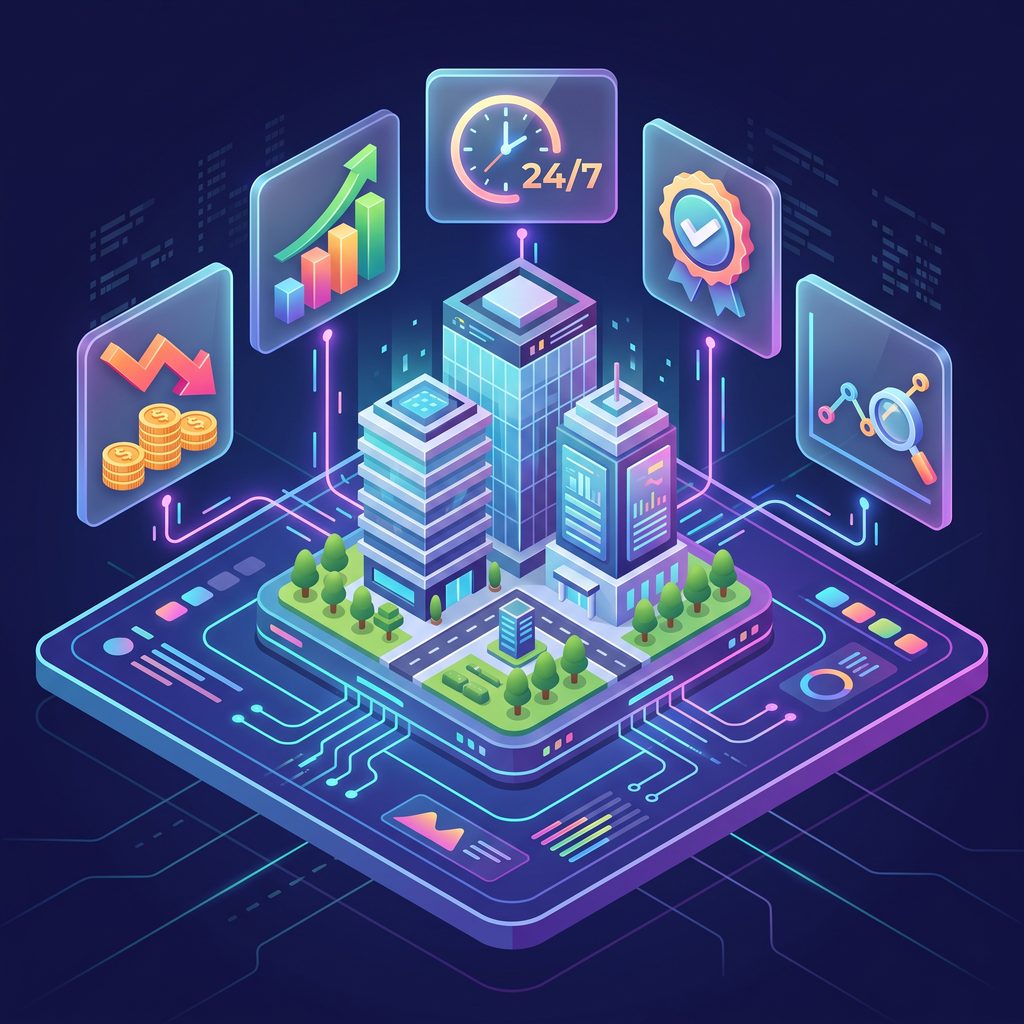
THE increase in the recovery rate This happens because the portal eliminates barriers. The debtor doesn't need to answer a call, doesn't need to negotiate with anyone, and can resolve their situation at any time, including at night or on weekends. This convenience converts debtors who would never answer a collection call.
THE 24/7 operation This means that collection never stops. While the human team operates during business hours, the portal is permanently available. Data from industry platforms shows that a significant portion of negotiations take place outside of business hours, at night and on weekends.
THE standardization of conditions It ensures that all negotiations follow the rules defined by the lender. There is no risk of an operator granting a larger discount than authorized or accepting conditions outside of the policy.
THE data generation Information about the defaulter's behavior, such as which pages they accessed, which conditions they simulated, and at what time they entered the portal, feeds the data intelligence of the collection operation, allowing for continuous refinement of the strategy.
Advantages for the defaulter
The debtor also benefits from self-negotiation. Total privacy eliminates the embarrassment of discussing debts with another person. Autonomy allows the debtor to calmly analyze the conditions without pressure from a negotiator. The convenience of accessing it anytime, anywhere makes regularization more accessible. The transparency of the conditions, with a real-time simulator, allows the debtor to make an informed decision.
Integration with the billing system
The self-negotiation platform works best when integrated with a multi-channel billing system. The portal does not replace other channels; it complements them.
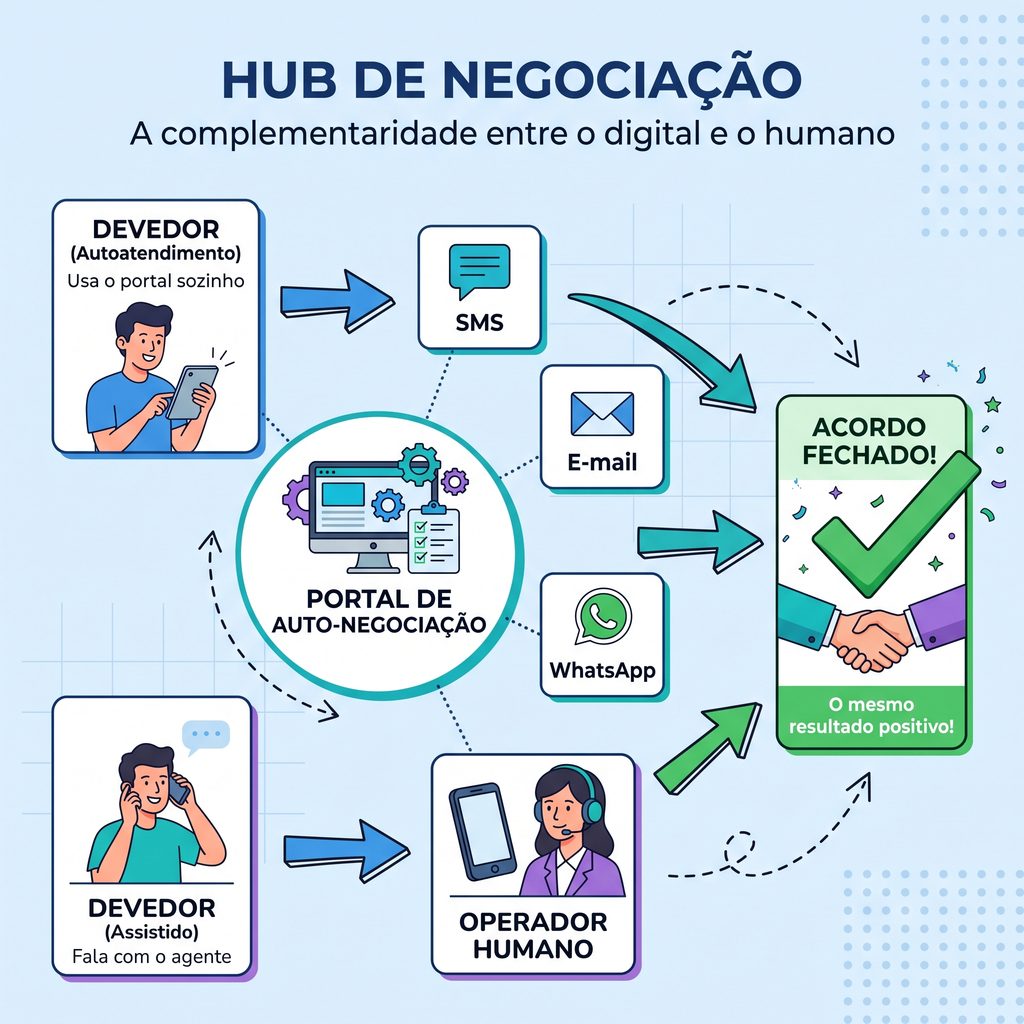
In practice, this works like this: the collection system sends reminders via SMS and email with a link to the portal. Debtors who prefer to resolve the issue themselves access the portal and negotiate. Debtors who do not access the portal are contacted via WhatsApp or phone. During the conversation, a human operator can direct the debtor to the portal to formalize the agreement.
This integration maximizes coverage: debtors with a digital profile use the portal; debtors who prefer human contact are assisted by the team. The result is an operation that efficiently reaches all debtor profiles.
The e-negotiator: an example of an auto-trading platform.
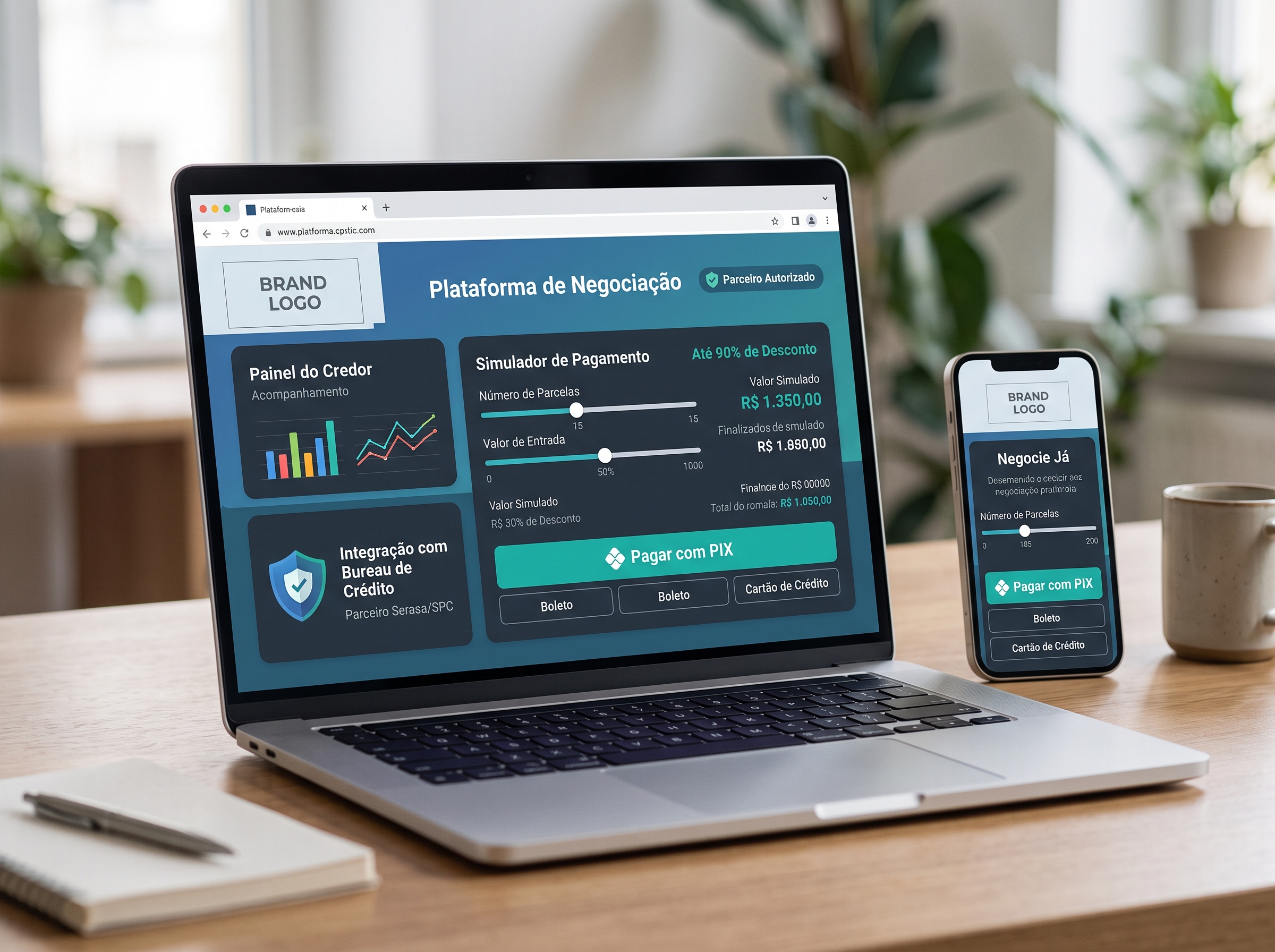
The Brazilian market already has mature self-negotiation platforms. Proprietary solutions developed by credit recovery consultancies offer advanced functionalities: real-time payment simulator, automatic generation of payment slips and PIX (Brazilian instant payment system), integration with credit bureaus for automatic settlement, monitoring dashboard for the creditor, and white-label operation (the portal can be customized with the creditor's brand).
Companies that use automated trading platforms as part of their debt recovery strategy report a significant increase in recovery rates and a substantial reduction in the cost per real recovered.
Frequently Asked Questions.
Can any company implement an automated trading platform?
Yes, provided you have a digitized portfolio of delinquent accounts. Companies that outsource debt collection to specialized agencies usually already have access to self-negotiation platforms as part of the contracted service.
Does self-negotiation replace human collection?
No. She adds to that. Some debtors prefer (and need) human contact to negotiate. Self-negotiation absorbs the portion of debtors who prefer to resolve issues on their own, freeing up the human team for more complex cases.
Can the debtor renegotiate terms on the portal?
The debtor chooses from the conditions pre-approved by the creditor. There is no free negotiation, which ensures standardization and control. If the debtor does not find a suitable condition, they can contact the collection team for a personalized negotiation.
THE [WB Tech] Way Back offers the e-negotiator, a complete self-negotiation platform that operates 24/7, with a real-time simulator and full integration with the collection operation. [Access and learn more]